Pigeons
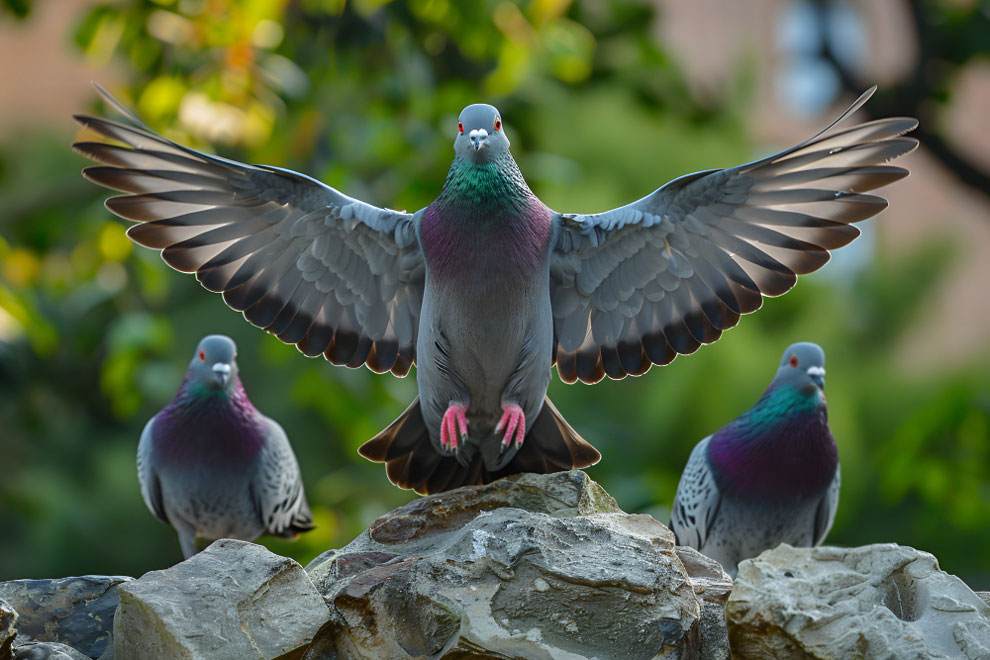
Pigeons (Columba livia) are one of the most widespread and troublesome urban pest birds in Australia. Commonly found around residential roofs, commercial buildings, warehouses, bridges, and public areas, pigeons thrive in human environments due to abundant food, water, and nesting sites. Their presence becomes a major issue when droppings, nesting debris, and noise create health, structural, and hygiene concerns.
Threats
+Pigeons are considered major urban pests due to the health and structural hazards they create. Their droppings carry bacteria, fungi, and parasites linked to respiratory and foodborne illnesses. When droppings dry, airborne dust may trigger allergies or asthma, particularly in enclosed or high-traffic areas.
Pigeon nests block gutters, downpipes, air vents, and solar panel gaps, leading to water damage, corrosion, and decreased energy efficiency. In commercial settings—especially restaurants, warehouses, and food-handling facilities—pigeons can contaminate surfaces, packaging, and stored goods, resulting in hygiene violations and costly clean-ups.
Dropping acidity can erode paint, metal, roofing materials, and building facades. Slip hazards increase in entryways and walkways where droppings accumulate. Additionally, bird mites from abandoned nests may invade indoor areas, causing irritation and discomfort for occupants.
Prevention
+Effective pigeon prevention focuses on eliminating food availability, blocking nesting areas, and installing deterrents that limit roosting.
- Keep outdoor eating areas clean; close bins tightly and remove spilled food promptly.
- Repair gaps in roofs, eaves, solar panel edges, and ventilation areas to prevent nesting access.
- Install bird-proofing such as nets, spikes, wires, or deterrent gel on ledges, beams, and flat roof sections.
- Trim trees and remove clutter around buildings that provide shelter.
- Fix water leaks and maintain proper drainage to reduce moisture that attracts pigeon activity.
- For severe infestations, professional-grade trapping, netting, and exclusion systems offer long-term control.
Avoid feeding pigeons, as this encourages flocking, increases breeding, and makes control significantly harder. Consistent monitoring ensures new nests or roosting sites are addressed before they grow into larger problems.
Summary
+Pigeons are a common urban pest known for spreading disease, damaging buildings, and creating hygiene issues around homes and businesses. Because they breed year-round and adapt easily to human environments, proactive prevention, exclusion techniques, and ongoing monitoring are essential. A combination of sanitation, bird-proofing, and professional control methods provides the most reliable long-term solution for keeping your property safe, clean, and pigeon-free.

