House Sparrow
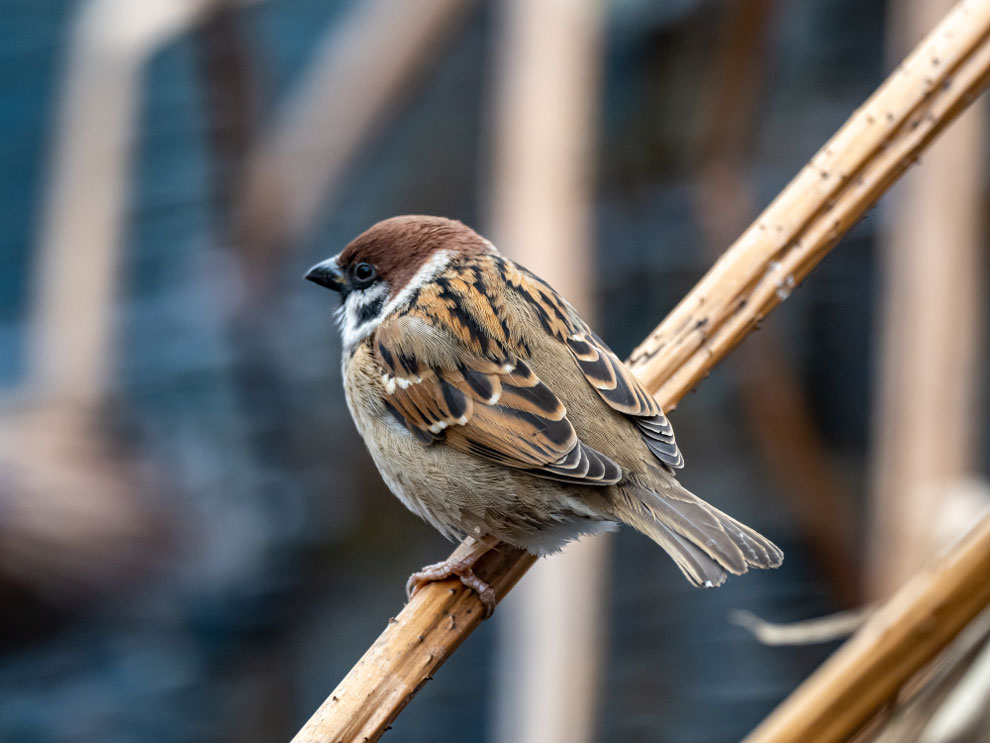
The house sparrow (Passer domesticus) is a small but highly persistent urban pest bird commonly found around homes, shops, warehouses, farms, and outdoor dining areas across Australia. Adapted to living near people, sparrows build nests in roof voids, signs, and building gaps, creating hygiene issues, noise disturbances, and property damage. Their rapid breeding and flocking behaviour make early control essential.
Identification
House sparrows are small birds, typically 14–16 cm long, with brown and grey plumage. Males have black bibs and grey crowns, while females and juveniles appear lighter with streaked brown colouring. Sparrows are frequently spotted in small flocks near food sources, rooftops, gutters, sheds, and commercial premises.
Species Characteristics
Threats
House sparrows pose several risks to both homes and commercial properties. Their nesting materials can block gutters, downpipes, solar panel gaps, and ventilation systems, leading to water leaks, odours, and potential fire hazards. In food-handling environments such as bakeries, cafes, and warehouses, sparrows contaminate surfaces and stored products with droppings, feathers, and parasites, creating hygiene concerns and possible regulatory issues.
Their droppings carry bacteria and pathogens that may trigger respiratory irritation, particularly when dried droppings become airborne. On farms and grain facilities, sparrows consume and contaminate livestock feed, leading to economic losses. Their aggressive flocking behaviour also crowds out some native small birds in urban environments.
Prevention
Effective sparrow control relies on denying access to nesting sites, reducing food availability, and installing deterrents.
Seal roof gaps, broken tiles, vents, and openings along eaves and wall cavities.
Install mesh screens over exhaust vents, air-conditioning gaps, and solar panel edges.
Maintain cleanliness around outdoor dining areas, grain storage, and livestock feeding zones.
Secure bins and remove food scraps that attract sparrow flocks.
Use bird-proofing such as netting, spikes, or wire systems on ledges, beams, and shed interiors.
Trim vegetation close to building edges and remove clutter where nests may form.
For established infestations, professional-grade trapping, exclusion, and nest removal provide long-term results. Early intervention reduces property damage and prevents rapid population growth.
Summary
The house sparrow is a common urban pest that nests inside buildings, damages structures, and creates hygiene issues around homes, shops, and commercial facilities. Their rapid breeding and adaptability make early prevention essential. A combination of exclusion methods, cleanliness, and ongoing monitoring offers the most effective long-term control to keep your property safe, hygienic, and sparrow-free.