info@gillpestworks.com.au | Trading Hours: Mon – Fri: 7:00 AM - 6:00 PM, Sat: 7:00 AM - 6:00 PM info@gillpestworks.com.au | Trading Hours: Mon – Fri: 7:00 AM - 6:00 PM, Sat: 7:00 AM - 6:00 PM
Gill Pestworks Blog

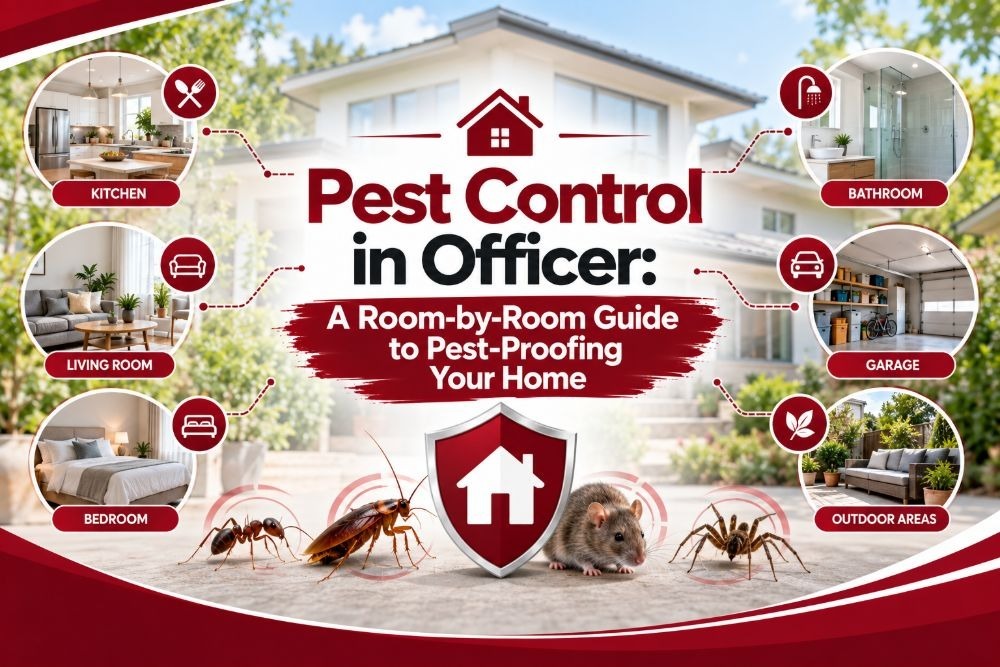
Pest Control in Officer: A Room-by-Room Guide to Pest-Proofing Your Home

30 Sep 2026

Most homeowners think about pest control the way they think about smoke alarms: something to check on properly only after a problem’s already made itself known. The trouble is, pests don’t wait for a convenient moment to show up, and by the time they’re obvious, they’ve often already settled into a few rooms without anyone noticing.

Walking through pest control in Officer room by room makes the whole thing far less overwhelming, since different areas of the house attract different pests for very different reasons. This guide breaks down exactly what to check in each part of your home, so you can close the gaps pests rely on before they ever get the chance to move in.

The Kitchen: Ground Zero for Most Infestations

It's no surprise the kitchen tops the list. Food, water, and warmth all live here, which makes it the single most attractive room in the house for cockroaches, ants, and the occasional mouse looking for an easy meal.

Start with the basics: seal food in airtight containers rather than leaving packets folded shut, wipe down benches after cooking, and check under the sink for any dripping pipes that might be creating a hidden water source. Gaps around the stove, behind the fridge, and inside cupboard hinges are common entry points worth checking regularly, since these spots rarely get disturbed during a normal clean.
The Bathroom and Laundry: Moisture Magnets

Bathrooms and laundries create exactly the kind of damp, humid environment cockroaches and silverfish are drawn to. Even a small, constant drip from a tap or an overflow pipe can be enough to sustain a hidden population for months without anyone realising.

Check around the base of the toilet, under the vanity, and behind the washing machine for signs of moisture buildup or small gaps where pipes enter the wall. Ventilating these rooms properly after showers or laundry loads also helps reduce the humidity pests rely on, making the space considerably less appealing in the first place.

Bedrooms and Living Areas: Often Overlooked

It's easy to assume bedrooms and living rooms are low-risk simply because there's no food around, but that's not entirely accurate. Spiders, ants, and occasionally cockroaches can still make their way in through skirting boards, window frames, and gaps around power points.

Furniture pushed tightly against walls creates undisturbed pockets that pests find appealing, so pulling items away from the wall occasionally and giving skirting boards a proper look over is worth building into your routine. Residential pest control in Officer often flags these overlooked areas during an inspection, since they're rarely checked as part of everyday cleaning.

Roof Voids and Subfloor Areas: Out of Sight, Out of Mind

These spaces are exactly where problems tend to develop unnoticed for the longest stretch of time. Roof voids offer rodents warmth and shelter, while subfloor areas provide termites with easy access to structural timber, all without a single visible sign from inside the living areas.

A home pest inspection in Officer typically includes a proper check of both spaces, using torches and moisture meters to spot activity that would otherwise go completely undetected. If your home has easy access to these areas, a periodic look for droppings, mud tubes, or unusual smells can catch a problem well before it spreads further into the structure.

The Garage and Storage Areas: A Pest's Favourite Hideout

Garages tend to collect clutter, and clutter is precisely what pests look for when searching for a quiet, undisturbed place to settle. Cardboard boxes, stacked timber, and rarely moved storage bins all create ideal shelter for spiders, rodents, and occasionally cockroaches.

Storing items in sealed plastic containers rather than cardboard removes one of the easiest food and shelter sources. It's also worth checking the gap under the garage door, since this is one of the most common entry points pests use to move between the outdoors and the rest of the home.

The Garden and Exterior: Where Most Pests Get Their Start

Before pests ever make it indoors, they're usually living somewhere in the garden first. Mulch beds, woodpiles, and dense garden borders close to the home's foundation all provide shelter that pests naturally gravitate toward, particularly ants and termites looking for a path into timber structures.

Keeping garden beds and mulch at least a small distance from the home's exterior walls reduces this risk considerably. Trimming back overhanging branches that touch the roofline also removes an easy bridge many pests use to access the home without ever needing to find a ground-level entry point.

Sealing Common Entry Points Around the Whole Property

Beyond individual rooms, a few entry points show up consistently across almost every property, regardless of layout. Gaps around weep holes, unsealed vents, and worn door seals all give pests a straightforward way indoors, often without leaving any obvious trace behind.

A local pest control company in Officer will usually check these spots as standard during an inspection, since sealing them properly makes a genuine difference to how effective any treatment ends up being. Addressing entry points alongside a treatment tends to produce far more lasting results than treatment alone.

Why a Professional Inspection Still Matters

Going through your home room by room genuinely helps, but it's not quite the same as a proper inspection carried out by someone trained to spot the signs most homeowners miss entirely. Licensed pest controllers in Officer know exactly where to look, what specific signs to check for, and how different pests behave depending on the season and the property's layout.

Pairing your own regular checks with a periodic professional inspection gives a home genuinely layered protection, rather than relying on visible signs alone to flag a problem that might already be well established.

When to Search for Pest Control Near Me

If your room-by-room check turns up droppings, damage, or any of the warning signs covered above, it's worth searching for pest control near me rather than waiting to see whether things improve on their own. Acting early, before a small issue spreads across multiple rooms, tends to make treatment faster, simpler, and considerably less costly.

Booking pest control services in Officer at the first sign of trouble also gives a technician the best chance of catching a problem while it's still contained to one area, rather than having spread throughout the home unnoticed.

Final Thoughts

Pest-proofing a home doesn't need to be complicated once you understand which areas carry the highest risk and why. A room-by-room approach, paired with regular checks and the occasional professional inspection, closes off far more opportunities for pests than most people realise. Gill Pestworks helps homeowners identify exactly these risk areas, offering thorough inspections and treatments built around how a home actually functions, room by room.

FAQs

Frequently Asked Questions

Which Room in the House Is Most at Risk of a Pest Infestation? +

The kitchen is usually the highest-risk area, given the combination of food, water, and warmth that attracts cockroaches, ants, and rodents.

Do Roof Voids and Subfloor Areas Need Regular Checking? +

Yes, these spaces often show the earliest signs of termite or rodent activity, well before anything becomes visible inside the living areas.

How Can I Reduce Pest Risk in the Garage? +

Storing items in sealed plastic containers instead of cardboard and checking the garage door gap regularly both help reduce shelter and entry points.

Does Garden Mulch Actually Attract Pests? +

Yes, mulch beds placed close to the home's foundation can provide shelter for ants and create an easy path for termites to access timber structures.

Is a Professional Inspection Necessary If I've Already Checked Every Room Myself? +

It's still worthwhile, since licensed technicians are trained to spot subtle signs and access areas that homeowners often can't check thoroughly on their own.