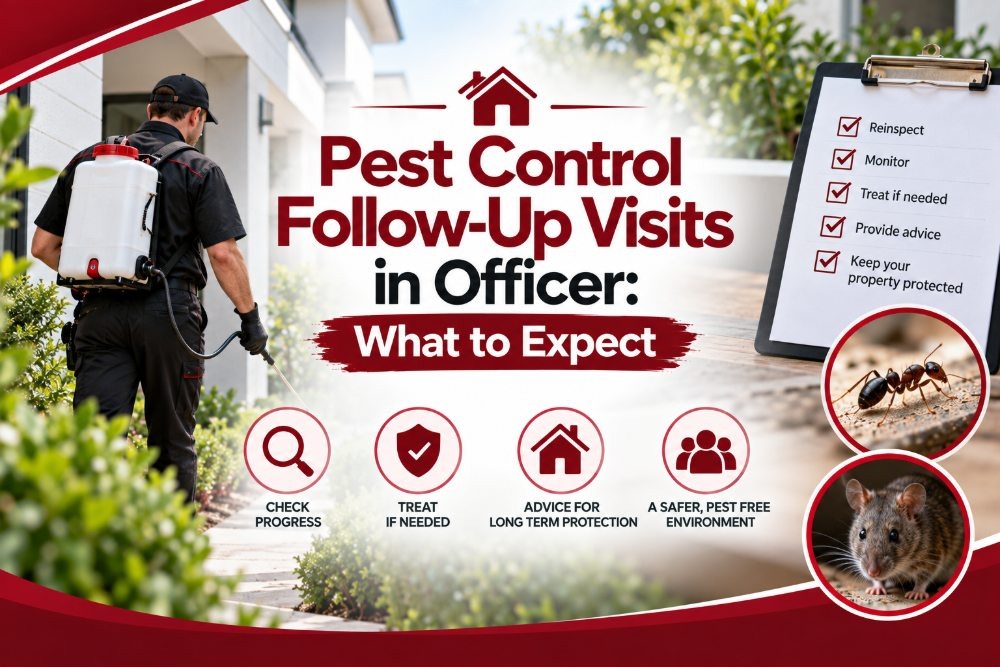
Booking pest control for the first time often comes with a mental checklist of what to expect: the technician arrives, treats the problem areas, and leaves you with a pest-free home. What catches plenty of people off guard is discovering a follow-up visit is part of the process too, and wondering whether that means the first treatment didn’t actually work.
The truth is far less concerning than it sounds. A follow-up visit is a normal, planned part of proper pest control in Officer, not a sign that something went wrong the first time around. This guide covers exactly what happens during that second visit, why it matters, and what to expect if one’s coming up on your calendar.
FAQs
Frequently Asked Questions
Does Needing a Follow-Up Visit Mean the First Treatment Failed?
+
No, follow-up visits are a planned part of most pest control processes, accounting for breeding cycles and giving treatments time to take full effect.
How Long After the First Treatment Should a Follow-Up Be Booked?
+
Typically between two and six weeks, depending on the pest involved and how long its breeding or hatching cycle takes.
Is a Follow-Up Visit Usually Included in the Price?
+
This varies by provider, so it's worth confirming upfront whether a follow-up is included as standard or charged separately.
What Happens If Pests Are Still Active During the Follow-Up?
+
The technician adjusts the treatment approach, often with a more targeted application in specific problem areas, usually covered under warranty if applicable.
Do All Pests Require the Same Number of Follow-Up Visits?
+
No, this depends on the pest's life cycle, with cockroaches and termites often needing more monitoring than faster-resolving issues like ants.