info@gillpestworks.com.au | Trading Hours: Mon – Fri: 8:00 AM - 5:00 PM, Sat: 8:30 AM - 4:00 PM info@gillpestworks.com.au | Trading Hours: Mon – Fri: 8:00 AM - 5:00 PM, Sat: 8:30 AM - 4:00 PM
Gill Pestworks Blog

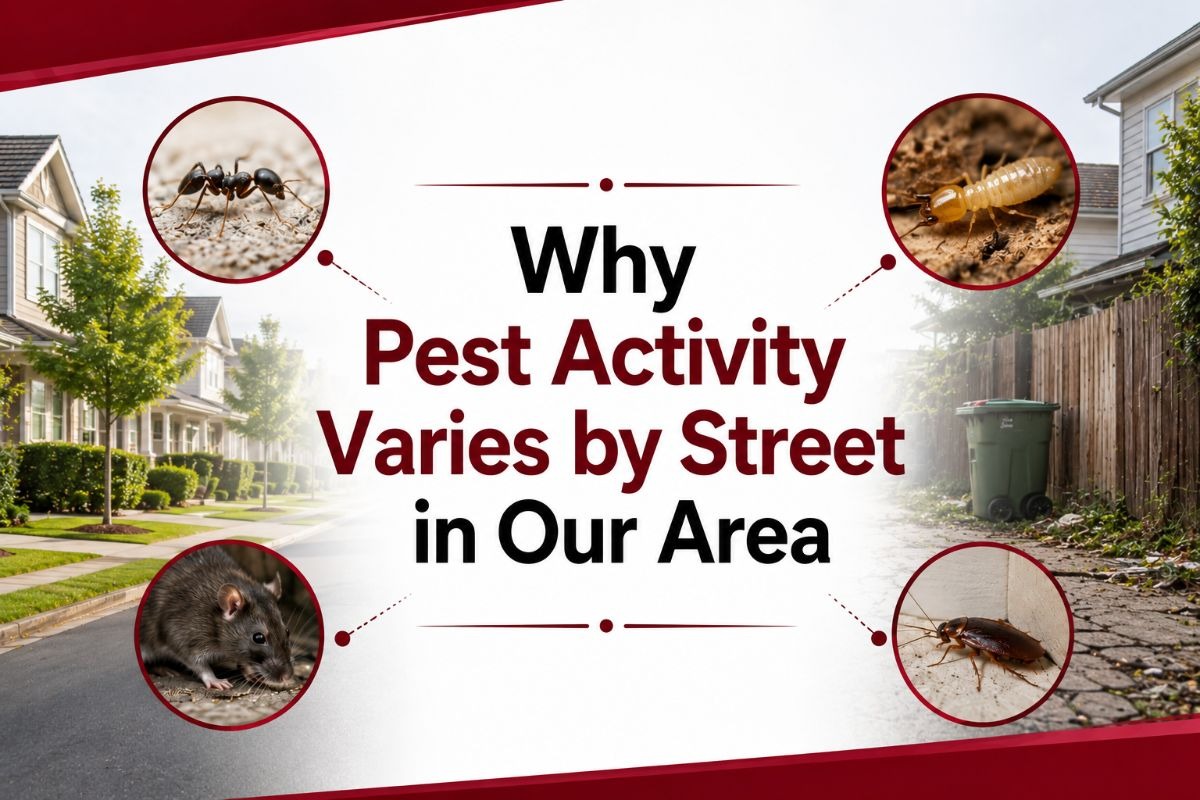
Why Pest Activity Varies by Street in Our Area

03 Sep 2026

Ever wondered why your neighbour two streets over never mentions pests, while your household seems to be fighting off ants every single spring? It’s not bad luck, and it’s certainly not a reflection of how clean either home is. Pest activity has far more to do with location than most people realise, and a street’s specific conditions can make an enormous difference to what shows up at the back door.

Anyone researching pest control in Officer eventually notices this pattern: some pockets of the suburb deal with recurring issues year after year, while others barely see a spider. Understanding why this happens makes it a lot easier to know what your particular property is actually up against.

Proximity to Bushland and Open Paddocks

Officer's growth has happened quickly, which means plenty of streets still sit right on the edge of bushland, cleared paddocks, or undeveloped land waiting for the next stage of construction. That boundary between "built" and "not yet built" is exactly where a lot of pest activity originates.

Wildlife corridors, native vegetation, and open grassland all support established populations of ants, spiders, and rodents that naturally drift toward nearby homes once conditions change, whether that's a dry spell pushing them to seek moisture or construction disturbing their usual habitat. Streets backing directly onto this kind of terrain tend to deal with noticeably more activity than those positioned deeper inside an established estate.

Soil Type and Its Effect on Termite Risk

Not all soil behaves the same way when it comes to termites, and this is one of the more overlooked reasons certain streets face a higher structural risk than others. Clay-heavy soil retains moisture differently from sandy or loamy ground, and termites are drawn to consistently damp conditions when searching for a way into timber framing.

Streets with heavier clay soil, particularly those with older drainage systems or ground that holds water after rain, often report termite activity more frequently. This is exactly why residential pest control in Officer sometimes needs a slightly different approach depending on which part of the suburb a property sits in, rather than a single blanket treatment applied the same way everywhere.

New Construction Disrupting Established Pest Populations

Newer streets bring their own complications, even without any obvious bushland nearby. Construction work disturbs soil, removes vegetation, and forces existing pest populations to relocate somewhere else, often straight into the nearest completed home.

Freshly poured concrete, exposed timber framing, and gaps around plumbing that haven't been fully sealed yet all create easy entry points during a home's first year or two. A street still under active development is likely to see a temporary spike in pest activity that gradually settles once construction wraps up and gardens mature.

Established Gardens and Mature Landscaping

Older, more established streets face a different set of pressures. Mature trees, thick garden beds, and years of accumulated mulch create ideal shelter for ants, spiders, and the occasional rodent looking for a place to nest undisturbed.

Ironically, some of the most attractive, well-established gardens in Officer are also the ones most likely to harbour ongoing pest activity, simply because dense vegetation offers exactly the kind of cover pests are drawn to. This doesn't mean tearing out the garden is the answer, but it does explain why leafier streets often report more consistent issues than newer ones with minimal landscaping.

Drainage, Water Flow, and Moisture Patterns

Water has to go somewhere, and depending on how a street's drainage is designed, some properties end up dealing with far more residual moisture than others. Low-lying blocks, areas near retention basins, or streets positioned at the bottom of a gentle slope tend to hold dampness longer after rain.

That extra moisture creates favourable conditions for termites, cockroaches, and certain ant species, all of which are drawn to damp, humid environments. A local pest control company in Officer familiar with the suburb's layout will often recognise these drainage-related patterns immediately, since they tend to repeat across similarly positioned streets.

Shared Walls and Higher-Density Housing

Townhouse developments and higher-density streets introduce a different variable entirely. Shared walls, common drainage lines, and closely spaced buildings mean pests can move between properties far more easily than they would across a standalone block with clear boundaries.

This is particularly relevant for cockroaches, which travel readily through shared plumbing and wall cavities. A single untreated unit in a row of townhouses can end up affecting several neighbouring properties over time, which is why pest control services in Officer aimed at higher-density housing sometimes need a coordinated approach across multiple households rather than treating one property in isolation.

Why Local Knowledge Actually Matters

All of this points to the same conclusion: a generic, one-size-fits-all approach to pest control rarely accounts for the specific conditions a particular street presents. Soil type, proximity to bushland, drainage patterns, and housing density all shape what a property is genuinely dealing with, and treating every home identically ignores those differences entirely.

Licensed pest controllers in Officer who work across the suburb regularly tend to build a strong sense of these local patterns over time, recognising which streets typically deal with termite pressure, which face more seasonal ant activity, and which higher-density areas need a broader treatment strategy. That local familiarity often makes a genuine difference in how accurately a problem gets diagnosed and resolved.

Finding Pest Control Near Me Suited to Your Specific Street

A quick search for pest control near me will turn up plenty of options, but not every provider has the same depth of local knowledge about Officer's specific conditions. Asking a potential provider whether they're familiar with your particular area, including its soil type, drainage, and surrounding land use, can reveal a lot about how tailored their approach is likely to be.

A property backing onto bushland needs a different strategy to one sitting in the middle of a dense townhouse development, and a provider who understands that distinction is far more likely to deliver a treatment plan that actually fits.

Final Thoughts

Pest activity was never going to be evenly distributed across a suburb as varied as Officer, and understanding why certain streets face more pressure than others makes it much easier to know what your own property is up against. Soil, drainage, surrounding vegetation, and construction history all play a role, often more than cleanliness or general upkeep ever could. Gill Pestworks has spent years working across Officer's different pockets, building genuine familiarity with how these local factors shape pest activity street by street.

FAQs

Frequently Asked Questions

Why Does My Street Seem to Have More Pests Than Nearby Areas? +

Factors like proximity to bushland, soil type, drainage patterns, and surrounding construction can all increase pest activity on specific streets more than others.

Does Soil Type Really Affect Termite Risk? +

Yes, clay-heavy or consistently damp soil tends to attract termites more readily than well-draining sandy or loamy ground.

Are Newer Estates More Prone to Pest Problems Than Older Streets? +

Newer estates often see a temporary spike due to construction disturbing existing pest populations, while older streets tend to face different pressures from established gardens and landscaping.

Do Townhouses and Higher-Density Housing Face Different Pest Risks? +

Yes, shared walls and common drainage lines make it easier for pests, particularly cockroaches, to move between neighbouring properties.