info@gillpestworks.com.au | Trading Hours: Mon – Fri: 7:00 AM - 6:00 PM, Sat: 7:00 AM - 6:00 PM info@gillpestworks.com.au | Trading Hours: Mon – Fri: 7:00 AM - 6:00 PM, Sat: 7:00 AM - 6:00 PM
Gill Pestworks Blog

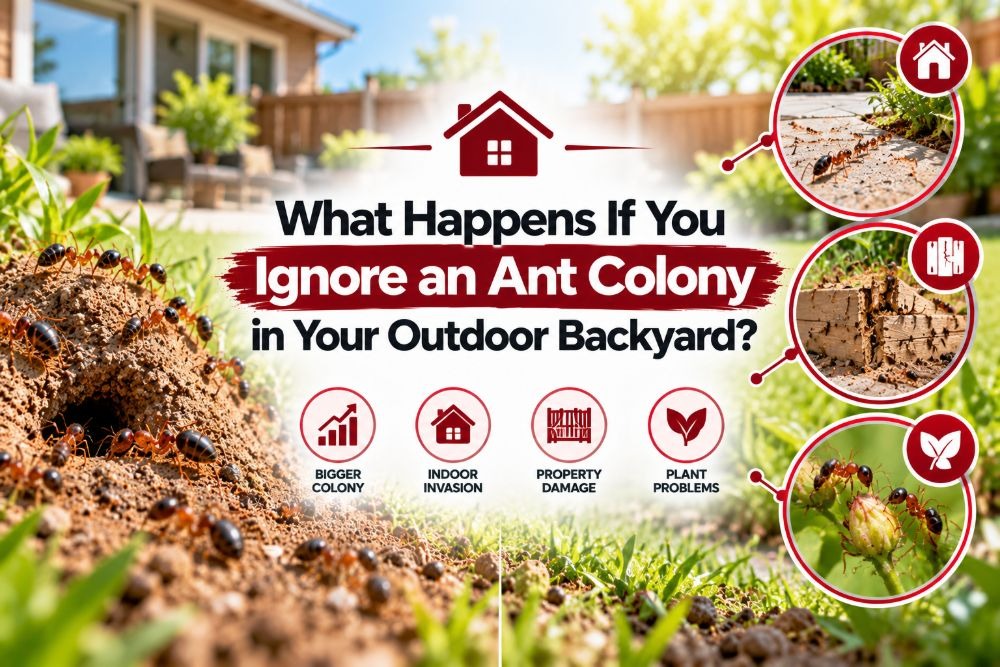
What Happens If You Ignore an Ant Colony in Your Outdoor Backyard?

21 Oct 2026

A few ants wandering across the patio rarely cause alarm. They look busy, harmless, and easy to ignore, so most of us step around them and carry on with the barbecue. The trouble is that what you see on the surface is usually just the tip of something much bigger, buried under your pavers or garden bed.

Leaving a colony alone doesn’t make it go away. This guide explains what actually happens when a backyard nest goes untreated, how quickly things can escalate, and why acting early with ant control in Officer saves you time, money, and plenty of frustration.

A Colony Grows Faster Than You Think

Ant colonies don’t stay the same size. A healthy nest has one or more queens laying eggs constantly, and a mature colony can hold thousands of workers. Warm, officer-summer conditions speed that up considerably, so a small nest in spring can become a serious problem by the following season.

Think of it like a snowball rolling downhill. Early on, it’s tiny and easy to stop, but every metre adds more mass and momentum. The longer you wait, the more workers there are, the wider they forage, and the harder the colony becomes to eliminate.

The Move From Backyard to Kitchen

Backyard ants rarely stay in the backyard for long. Workers send scouts in every direction looking for food and water, and once one finds a crumb or a sticky spill inside, it lays a scent trail for the rest of the colony to follow. Within days, a few visitors can turn into a steady parade across your kitchen bench.

That’s why so many indoor ant problems start with an outdoor nest. Treating the kitchen trail alone only deals with the workers you can see. Residential ant control in Officer works best when we treat the nest itself, because that’s the source feeding the whole invasion.

Bites, Stings, and Backyard Safety

Not every ant is harmless to people and pets. Some species bite, and others sting, leaving painful welts that can swell and itch for days. Children playing barefoot on the lawn and pets sniffing around garden beds are the most likely to cop it.

A small number of people also react badly to stings, with swelling that spreads well beyond the bite. If you’ve got kids, dogs, or a regular outdoor entertaining area, an unmanaged colony turns an enjoyable yard into something you’d rather avoid.

Damage to Lawns, Paving, and Garden Beds

Ants gradually alter the soil beneath your property. Their underground passageways loosen earth near plant roots, while colonies beneath paving stones may eventually make the surface uneven or unstable. Tiny piles of loose soil appearing beside cracks and borders can indicate that ant activity is taking place below the surface.

Gardens suffer in other ways too. Many ants protect sap-sucking insects like aphids, because they feed on the sweet honeydew those insects produce. Ignoring a colony can indirectly put your vegetables and ornamental plants under extra pressure.

Ants Can Attract Other Pests

An active nest rarely exists in isolation. Ants bring food scraps, dead insects, and moisture-rich debris into their tunnels, and that activity can draw other pests looking for easy meals. Cockroaches and spiders often show up where ant activity is heavy.

It resembles a popular cafe that draws customers, bringing additional activity along with it. Treating the ant colony promptly eliminates one of the factors that could attract other unwanted pests to your outdoor space.

Contamination and Hygiene Concerns

Ants travel across all sorts of surfaces before they reach your home, including bins, drains and soil. When they walk across benchtops, food packaging, or pet bowls, they can leave contamination behind. That’s especially worrying in kitchens and around areas where children eat.

You don’t need to panic about every ant, but a persistent trail near food preparation areas deserves attention. Once a colony has established a route into your home, it’ll keep returning until you deal with the nest properly.

Why DIY Sprays Rarely Fix the Problem

Supermarket sprays kill whatever they touch, which feels satisfying at the moment. The nest, however, sits underground or inside a hidden cavity, well out of reach. Spraying a trail can even scatter the colony, causing it to split into several smaller nests across your property.

That’s the frustrating part about trying to handle a bigger colony on your own. You can win the battle against the ants in front of you while the colony quietly carries on below. Proper ant treatment in Officer focuses on baits and targeted applications that workers carry back to the nest, which reaches the queen and the rest of the colony.

Signs It’s Time to Take Action

A few warning signs suggest the colony has grown beyond a nuisance. Fine soil mounds along paving edges, ants streaming in steady numbers along the same path, and new trails inside the house all point to an established nest nearby. Winged ants emerging in large groups usually mean a mature colony is ready to expand.

If you spot any of these, there’s little benefit in waiting to see what happens. Bringing in professional ant control in Officer at this stage keeps the job smaller and the cost lower than waiting until the problem has spread through the garden and into the house.

When to Search for Ant Control Near me

If you’ve noticed any of the signs above, it’s time to start searching for ant control near me rather than hoping the problem resolves itself. A proper inspection will show you where the nest is and how far the colony has spread, which is information you can’t get from guesswork.

Choose a provider who explains what they find, gives a clear price before starting, and includes follow-up support if activity returns. Acting early keeps the whole process simple, particularly before the warmer months push colonies into peak growth.

Final Thoughts

Leaving an ant colony in your backyard untreated may seem convenient, but it often results in a growing infestation, increased indoor activity, and higher treatment costs down the track. Recognising the warning signs early and taking prompt action helps prevent the situation from escalating. At Gill Pestworks, we locate the nest, apply appropriate treatments, and provide follow-up support, helping homeowners reclaim their outdoor spaces without unwanted ant colonies.

FAQs

Frequently Asked Questions

What Happens If I Ignore an Ant Nest in My Backyard? +

The colony keeps growing, forages further, and often moves into the house in search of food and water. Over time, it can also affect lawns, paving, and garden plants.

Can a Backyard Ant Colony Spread into My Home? +

Yes. Scout ants find food indoors and lay scent trails for the rest of the colony to follow, so an outdoor nest is a common source of indoor ant problems.

Are Ant Bites Dangerous? +

Most are painful but minor, though some species sting and a small number of people have stronger reactions. Children and pets are most likely to be bitten.

Why Don’t Store-Bought Sprays Get Rid of a Colony? +

They only kill the ants they touch and rarely reach the nest. Spraying can also split a colony into several smaller ones.

When Should I Call a Professional? +

Call if you see soil mounds, steady ant trails, repeated indoor invasions, or large numbers of winged ants, as these usually mean an established colony.