info@gillpestworks.com.au | Trading Hours: Mon – Fri: 7:00 AM - 6:00 PM, Sat: 7:00 AM - 6:00 PM info@gillpestworks.com.au | Trading Hours: Mon – Fri: 7:00 AM - 6:00 PM, Sat: 7:00 AM - 6:00 PM
Gill Pestworks Blog

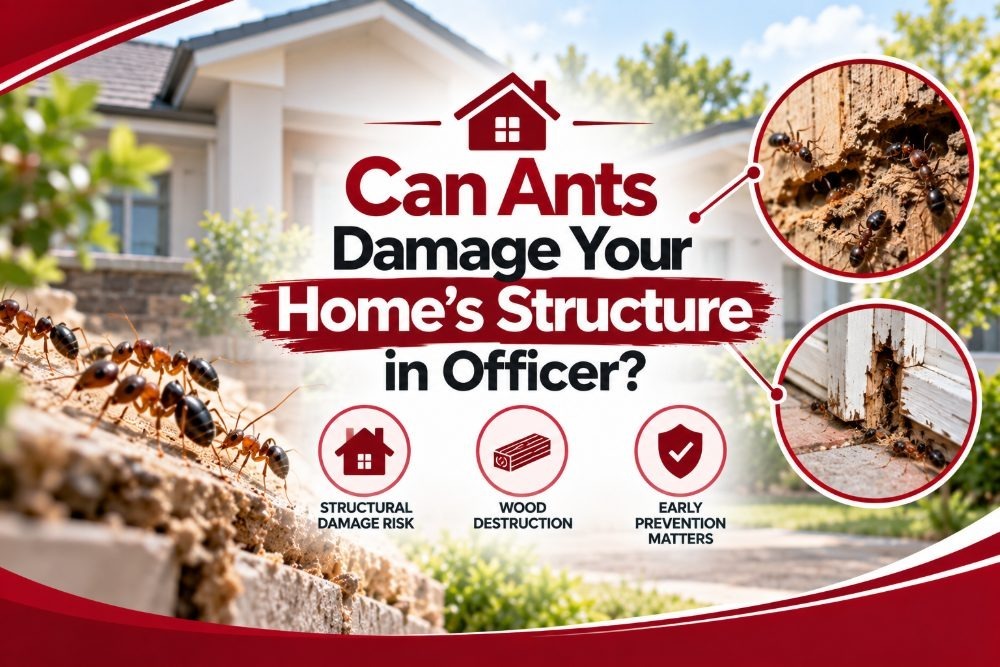
Can Ants Damage Your Home’s Structure in Officer?

06 Oct 2026

Spotting a trail of ants across the kitchen floor is annoying, sure, but most homeowners file it under nuisance rather than genuine threat. Termites get all the attention when it comes to structural damage, while ants tend to get dismissed as a minor inconvenience that disappears once the bait’s been put down.

That assumption isn’t entirely accurate, though the full picture is a bit more nuanced than headlines might suggest. Understanding what ant control in Officer actually protects against, and which species genuinely pose a structural risk, helps separate the real concerns from the ones that are mostly just irritating.

Most Common Ants Are Harmless to Timber

The good news first: the vast majority of ants found wandering through Officer homes, including black house ants and small garden varieties, pose no real threat to structural timber whatsoever. These species are drawn to food, particularly sugary or greasy residue, and their presence indoors is more about foraging than nesting inside your walls.

Black house ants, probably the most commonly seen species locally, build nests in soil, under pavers, or within garden beds rather than inside timber framing. Their visits indoors are essentially supply runs, not an attempt to establish a colony within the structure itself.
The Species That Actually Cause Concern

Carpenter ants are the exception worth knowing about, and they operate quite differently to the ants most people are used to seeing. Rather than eating timber the way termites do, carpenter ants excavate smooth tunnels through wood to create nesting galleries, hollowing out sections as they go.

This distinction matters considerably. While carpenter ants don't consume the wood itself, the excavation process still weakens structural timber over time, particularly in damp or previously damaged areas where the wood's already softer and easier to tunnel through. Ant treatment in Officer targeting this specific species needs a different approach entirely compared to general ant control.

Ants vs Termites: What's the Real Difference?

This comparison comes up constantly, and for good reason, since the two are easy to confuse at a glance. Termites consume timber directly as a food source, working through structural framing methodically and often invisibly from the outside. Ants, even carpenter ants, don't eat wood at all.

The damage pattern also looks different once you know what to check for. Termite damage tends to follow the wood grain, leaving a honeycomb-like pattern as they feed. Carpenter ant tunnels, by comparison, look smoother and cleaner, since they're excavating rather than consuming, and you'll often find small piles of wood shavings, almost like fine sawdust, near an active nest site.

Signs an Ant Problem Might Be More Than a Nuisance

A few specific indicators suggest something more serious than the usual kitchen trail might be going on. Finding small piles of what looks like sawdust near skirting boards, door frames, or window sills is one of the clearest signs, since this residue is a direct byproduct of carpenter ants excavating a nest nearby.

Hearing a faint rustling sound inside a wall cavity, particularly at night when the house is quiet, is another indicator worth taking seriously. Combined with persistent ant activity in the same specific area over several weeks, these signs point toward residential ant control in Officer being worth booking sooner rather than later.

Where Carpenter Ants Typically Nest

Carpenter ants favour damp or previously compromised timber, which means certain areas of a home carry higher risk than others. Window frames with old water damage, timber decking exposed to weather, and roof areas with a history of leaks all create the softer, moisture-affected wood these ants prefer.

This is part of why addressing moisture issues around the home matters as much as pest treatment itself. A dry, well-maintained structure offers far less appeal to carpenter ants than timber that's already been softened by water exposure over time.

Why Professional Ant Control Matters for This Species

General ant baits designed for common household species don't always work effectively against carpenter ants, largely because their colony structure and nesting behaviour differ significantly. A nest might be split across multiple satellite locations, meaning a single treatment point often misses a substantial part of the overall colony.

Professional ant control in Officer accounts for this complexity, using targeted treatments and proper inspection techniques to locate the primary nest rather than just treating visible trails. A technician trained specifically in identifying carpenter ant activity will check timber for the telltale excavation pattern rather than assuming every ant problem behaves the same way.

What to Do If You Suspect Carpenter Ant Activity

Finding sawdust-like debris or hearing unusual sounds within a wall cavity warrants a proper inspection rather than reaching for a generic ant spray from the supermarket. Store-bought products typically only address the ants visible at the time, doing little to resolve a nest hidden deep within timber framing.

A licensed pest controller in Officer will assess the extent of the activity, identify which species is actually involved, and recommend treatment specific to what's been found, rather than applying a blanket approach that might not touch the actual source of the problem.

When to Search for Ant Control Near Me

Most ant sightings genuinely don't warrant concern, and a standard treatment resolves the issue without any structural implications whatsoever. That said, if you're noticing the specific signs covered here, sawdust piles, rustling sounds, or persistent activity concentrated in one particular spot, searching for ant control near me becomes a sensible next step rather than something to put off.

Catching carpenter ant activity early, before extensive tunnelling has weakened a significant section of timber, makes treatment considerably simpler and keeps repair costs to a minimum.

Final Thoughts

Most ants wandering through an Officer home are harmless foragers with no interest in the timber holding the place together. Still, carpenter ants are a genuine exception worth knowing how to spot. Understanding the difference between a passing nuisance and a potential structural concern makes it far easier to know when professional help is actually warranted. Gill Pestworks helps Officer homeowners correctly identify what they're dealing with, offering targeted ant treatment built around the specific species involved rather than a one-size-fits-all approach.

FAQs

Frequently Asked Questions

Do All Ants Damage Timber in a Home? +

No, most common species like black house ants pose no structural risk and are simply foraging for food rather than nesting in timber.

What's the Difference Between Carpenter Ant Damage and Termite Damage? +

Carpenter ants excavate smooth tunnels without eating the wood, while termites consume timber directly, leaving a honeycomb-like feeding pattern behind.

What Are the Warning Signs of Carpenter Ant Activity? +

Small piles of sawdust-like debris near frames or skirting boards, along with faint rustling sounds inside walls, are key indicators worth investigating.

Can I Treat Carpenter Ants with a Standard Ant Bait? +

Generally not effectively, since their nesting structure often includes multiple satellite locations that a standard treatment point may miss entirely.

How Urgently Should I Act If I Suspect Carpenter Ant Activity? +

It's worth acting promptly, since early treatment before significant tunnelling occurs keeps structural impact and repair costs considerably lower.