
info@gillpestworks.com.au | Trading Hours: Mon – Fri: 7:00 AM - 6:00 PM, Sat: 7:00 AM - 6:00 PM info@gillpestworks.com.au | Trading Hours: Mon – Fri: 7:00 AM - 6:00 PM, Sat: 7:00 AM - 6:00 PM
Gill Pestworks Blog

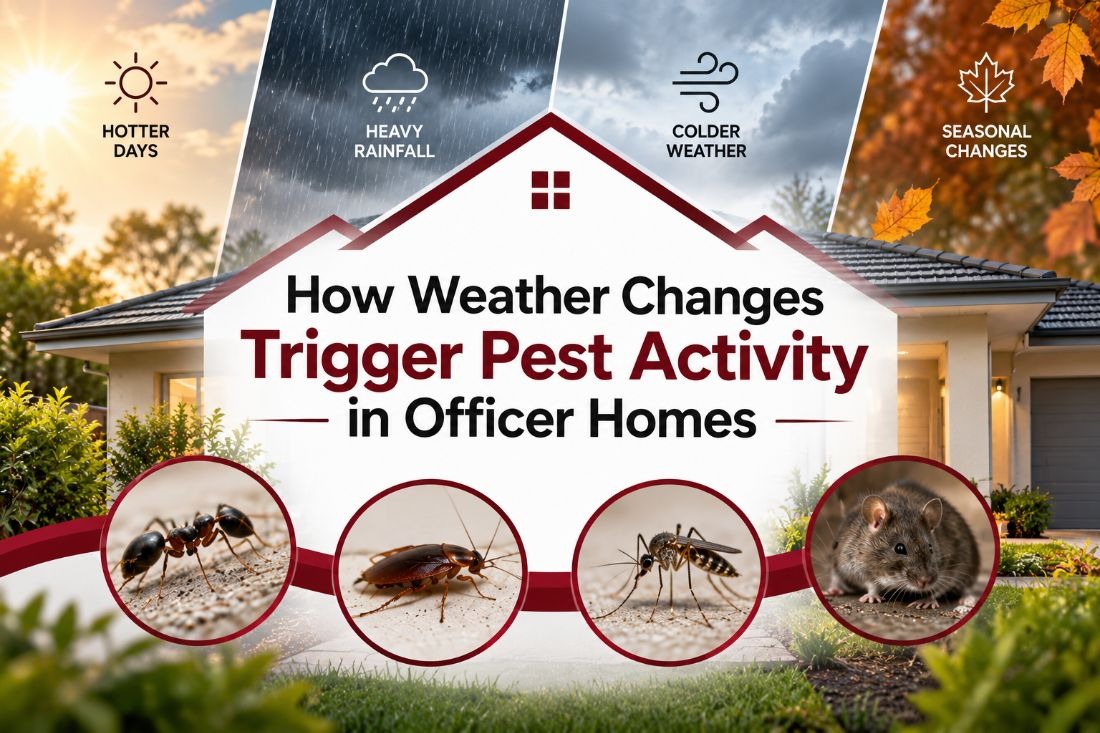
How Weather Changes Trigger Pest Activity in Officer Homes

08 Sep 2026

Ever noticed how spiders seem to multiply the day before a storm rolls in, or how ants suddenly appear on the kitchen bench right as the humidity climbs? That’s not a coincidence, and it’s certainly not your imagination. Pests respond to weather shifts long before humans notice anything’s changed, which means the signs of an approaching problem are often visible days before the weather itself actually turns.

Understanding this connection makes a real difference for anyone managing pest control in Officer, where weather swings between dry heat, sudden storms, and cooler snaps throughout the year. Here’s what’s actually going on behind the scenes, and why timing your pest control around weather patterns, rather than waiting for an obvious infestation, tends to work far better.

Falling Air Pressure Sends Pests Looking for Shelter

Long before rain actually falls, barometric pressure starts dropping, and plenty of insects can sense that shift well before humans ever feel a difference in the air. Ants, spiders, and cockroaches all respond to falling pressure by seeking shelter, which usually means moving indoors toward the nearest dry, stable environment they can find.

This is exactly why pest sightings often spike a day or two before a storm actually hits. The pests aren't reacting to rain that's already fallen; they're responding to atmospheric changes that signal rain is on its way, and your home looks like a far safer bet than staying exposed outside.
Rising Humidity Creates Ideal Breeding Conditions

Once the rain does arrive, humidity levels climb, and that shift creates near-perfect breeding conditions for a range of common pests. Cockroaches, in particular, thrive in warm, humid environments, and a sustained period of wet weather often triggers a noticeable increase in breeding activity within just a few weeks.

Termites respond to humidity in a similar way, since damp conditions make timber more attractive and easier to access. Residential pest control in Officer often needs to account for these humidity-driven spikes, particularly during Victoria's wetter months when moisture lingers in soil, subfloors, and garden beds for extended periods.

Heavy Rain Floods Underground Nests

Ants and certain ground-dwelling pests build their colonies below the surface, which works perfectly fine until heavy rain floods the tunnels they've spent weeks constructing. When that happens, entire colonies relocate quickly, often moving straight into the nearest dry structure available.

This explains why ant activity indoors frequently surges immediately after a heavy downpour, rather than during the rain itself. The colony isn't necessarily attracted to your kitchen specifically; it's displaced and searching for the fastest available shelter, and a house with easy entry points fits the bill perfectly.

Temperature Drops Push Rodents Indoors

As autumn shifts into winter, dropping temperatures send rodents searching for warmth, and homes offer exactly the kind of stable, insulated environment they're after. Roof cavities, wall gaps, and subfloor areas all provide shelter from the cold, along with proximity to food sources that outdoor environments can no longer reliably offer.

This seasonal shift is one of the most predictable patterns in pest behaviour, and it's why local pest control companies in Officer often see a consistent rise in rodent-related callouts as the weather cools. Sealing entry points before temperatures drop significantly reduces the chances of rodents establishing themselves indoors once the cold sets in properly.

Wind and Storms Damage Nests, Forcing Pests to Relocate

Strong winds and storm activity don't just bring rain; they physically damage the nests and colonies pests have built outdoors, forcing sudden relocation. Wasp nests built under eaves or in garden trees are particularly vulnerable to storm damage, and a displaced colony often searches for a new location within days.

This is one of the less obvious weather-related triggers, but it's a genuine factor worth understanding. A structurally sound home offers far more protection than a damaged outdoor nest, which makes it an appealing option once a storm has disrupted a colony's original location.

Dry Spells Push Pests Toward Reliable Water Sources

Weather-driven pest activity isn't limited to wet conditions. Extended dry spells push pests toward any reliable water source they can find, and a home's bathroom, kitchen, or leaking outdoor tap becomes far more attractive once natural water sources dry up.

Cockroaches and ants both respond strongly to this pattern, often appearing in noticeably higher numbers during prolonged dry periods compared to milder, more consistent weather. Pest control services in Officer frequently see this play out toward the end of a hot, dry summer, when outdoor moisture becomes genuinely scarce.

Why Timing Pest Control Around Weather Patterns Makes Sense

Given how predictably pests respond to weather shifts, timing treatments to align with seasonal changes tends to work far better than waiting for an infestation to become obvious. Scheduling a treatment just before the wetter months hit, for example, creates a barrier before humidity-driven breeding really kicks into gear.

Licensed pest controllers in Officer who understand these patterns can often recommend the right timing based on what's typically happened in previous seasons, rather than treating every booking as a reactive, one-off event. This proactive approach tends to catch problems before they escalate, rather than scrambling to respond once pests have already settled in.

Finding Pest Control Near Me Ahead of a Weather Change

If you've noticed a storm forecast on the horizon, or you're heading into a seasonal shift that's historically brought pest problems your way, it's worth searching for pest control near me before the weather actually turns rather than after. Booking ahead of a predictable seasonal trigger gives a treatment the chance to establish a barrier before pests start actively seeking shelter indoors.

Waiting until pests have already moved in usually means dealing with a more established problem, which takes longer and costs more to resolve than a proactive treatment timed around the weather patterns that triggered it in the first place.

Final Thoughts

Weather plays a far bigger role in pest behaviour than most homeowners realise, often triggering activity well before any obvious signs appear indoors. Falling pressure, rising humidity, sudden storms, and seasonal temperature shifts all send pests searching for shelter, and understanding these patterns makes it much easier to stay ahead of the problem rather than reacting once it's already inside. Gill Pestworks keeps a close eye on these seasonal and weather-driven trends across Officer, helping homeowners time their pest control before conditions turn favourable for an infestation to take hold.

FAQs

Frequently Asked Questions

Why Do I See More Bugs Right Before It Rains? +

Falling air pressure signals an approaching storm, and many insects respond by seeking shelter indoors before the rain actually arrives.

Does Humidity Really Increase Pest Activity? +

Yes, rising humidity creates favourable breeding conditions for cockroaches and increases termite activity due to the added moisture in timber and soil.

Why Do Ants Suddenly Appear Indoors After Heavy Rain? +

Heavy rain often floods underground ant colonies, forcing them to relocate quickly to the nearest dry shelter, which is frequently a nearby home.

Do Rodents Become More Active in Cooler Weather? +

Yes, dropping temperatures push rodents to seek warmth and shelter indoors, making autumn and winter common periods for increased rodent activity.

Is It Worth Booking Pest Control Before a Season Change? +

Yes, timing treatments ahead of predictable seasonal shifts, such as before wetter months or dropping temperatures, helps establish protection before pest activity typically increases.